
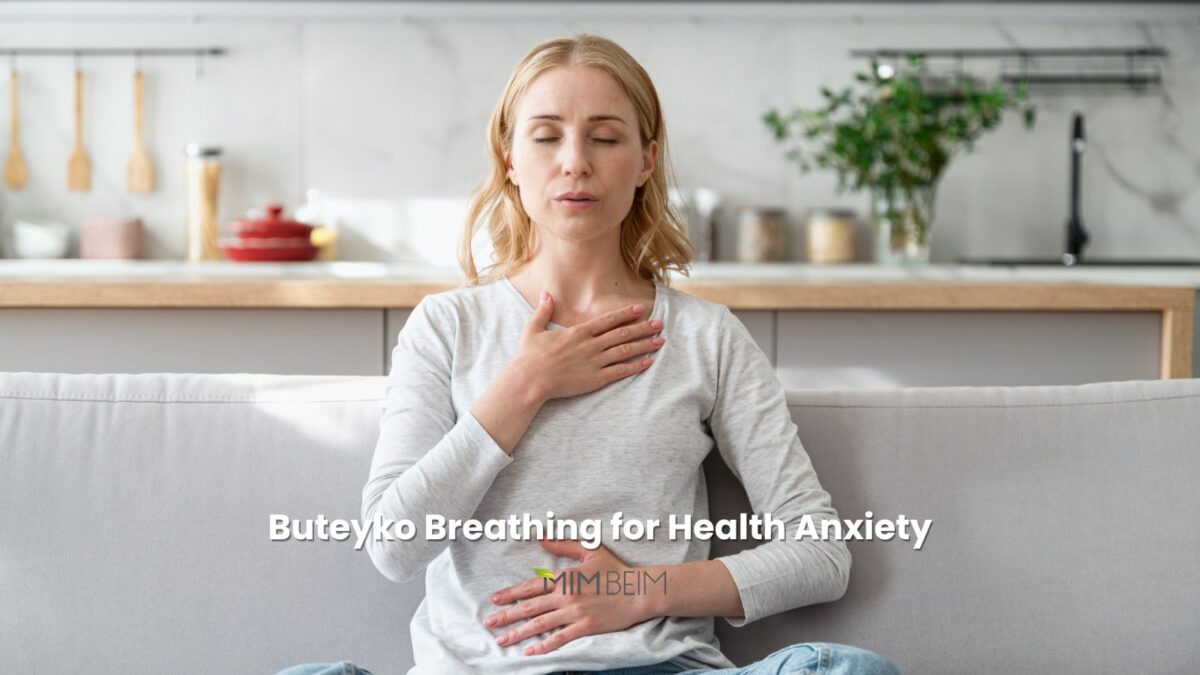
Could It Be Health Anxiety? When Your Breathing Fuels Your Fear

Buteyko Breathing for health anxiety
It’s normal to notice changes in your body. For instance, a sore throat may be a sign that you have caught a head cold, and you need to take it easy for a day or so. A headache could be due to not drinking enough fluids, and prompt you to drink a glass of water.  However, if you are someone who suffers from health anxiety, your thoughts jump immediately to the worst-case scenario… that sore throat is a certain sign of throat cancer. And the headache? Proof positive of a brain tumour.

The Mouse Wheel

No matter how unlikely the probability, and how much someone may try to point out the most likely (and reasonable) explanation for the symptom, like a mouse on a wheel, the thoughts of a person with health anxiety will inevitably loop back to the least likely, catastrophic diagnosis. Health anxiety is exasperating for relatives and friends close to the person, frustrating for practitioners trying to help, but most of all, health anxiety is a hellish, frightening and exhausting condition for the sufferer. Because whatever the symptom, it FEELS real.

Due Diligence

If the symptom you are feeling has not been experienced before, absolutely check it out with a health professional. Do your due diligence. Here are the rules. Do not check with Dr. Google first. Do not seek advice from a Facebook group. Instead, find a reputable health professional such as a GP, a specialist or a physiotherapist etc. You then need to trust their opinion. This is their expertise. If they consider that further tests, examinations, or procedures are required, by all means get them done. If the result is negative, ie it’s likely your fears are unfounded, then it’s possible your symptom is a symptom of anxiety. You must take this on board. Repeat. Do not Google. Do not seek advice from a Facebook group. Do not double-guess your expert. It WILL end in tears. Yours. The process of trusting that your symptom, however real it feels, is ‘only’ anxiety is difficult. But necessary. Now is the time to pull out your trusty toolkit… and get to work to break this vicious, debilitating pattern. Practice makes permanent. Tools in your toolkit may include a good diet, a regular exercise routine, sleeping well and breathing well. When you breathe correctly, slow diaphragmatic breathing helps to switch on the parasympathetic or relaxing nervous system.  Learn how to retrain your breathing with one of my BreatheWell courses.

The Buteyko Connection: How Dysfunctional Breathing Fuels Health Anxiety

If the physical symptoms of worry—like racing heart, chest discomfort, or dizziness—drive your health anxiety, it’s crucial to understand the role of your breath. These frightening sensations are often not caused by a serious illness, but by a physical state known as Hyperventilation Syndrome (HVS), which is directly linked to dysfunctional breathing patterns. As a Naturopath, I understand that true wellness requires addressing the root causes. In the context of anxiety, the physical root cause may simply be a pattern of dysfunctional breathing. Hyperventilation Syndrome (HVS): The Vicious Cycle The key to resolving symptoms of anxiety and panic is normalising your sensitivity to carbon dioxide (CO₂).
  • The Problem: When you over-breathe (taking too many breaths, too large, or too often), you ‘gas out’ or expel too much CO₂. This causes a state of relative hypocapnia (low CO₂ in the blood).
  • The Symptoms: The body is highly sensitive to this drop in CO₂. To compensate, the following physiological chain reaction occurs, mimicking a medical crisis:
    • Vascular Constriction: Blood vessels narrow, especially those leading to the brain, which causes dizziness, blurred vision, and difficulty concentrating—common symptoms that fuel health anxiety.
    • Neuromuscular Irritability: Nerves become highly excitable, leading to tingling, numbness (paresthesia), and muscle twitching.
    • The Adrenaline Surge: The body interprets the chemical shift as a genuine emergency, activating the “fight-or-flight” response and flooding the body with adrenaline. This causes the racing heart and the feeling of air hunger often associated with panic.
This cycle is self-reinforcing: anxiety leads to poor breathing, and poor breathing generates physical symptoms that reinforce the health anxiety. Buteyko’s Role: Training the Autonomic Nervous System The Buteyko Method offers a direct, evidence-based strategy to break this cycle by resetting the brain’s breathing centres. This involves calming the autonomic nervous system and teaching the body to tolerate normal CO₂ levels.

The Principle of CO₂ Desensitization

Some of the core Buteyko exercises that help with anxiety involve reduced breathing exercises. These gentle exercises intentionally create a momentary, mild air shortage. This might seem counterintuitive, but it’s effective for two reasons:
  1. Chemical Reset: The temporary reduction of breath,  causes a slight, safe accumulation of CO₂, while maintaining correct oxygen levels.  This trains the breathing receptors to accept slightly raised CO2 levels without causing anxiety.
  2. Breathing Centre: Retraining via neuroplasticity: Consistent practice gradually desensitises the brain’s respiratory centres. The brain recalibrates to maintain the ideal amount of CO2, helping to regulate the nervous system, helping you deal with any stress. By practising the Buteyko Method, you are essentially training your nervous system to remain calm, even under stress. This is particularly valuable for individuals dealing with chronic stress who are constantly operating near their threshold for panic.
  3. Practical Steps for Reclaiming Control: Mim Beim’s holistic approach means addressing the underlying mechanisms of anxietyFocus on Nasal Breathing: The first step is maintaining 24/7 nasal breathing. Breathing through the nose automatically engages the diaphragm and slows the pace of respiration, which is immediately calming to the nervous system:
    • Practice Reduced Breathing: Learning the Buteyko Breathing techniques helps you develop instant, portable tools to interrupt the panic cycle. If you feel a surge of anxiety symptoms, these exercises allow you to quickly and quietly restore balance.
    • Measure Your Progress: Using the Control Pause (CP) test allows you to objectively measure your progress. As your CP score increases, your sensitivity to CO₂ increases, and your symptoms of anxiety will naturally diminish.
When you learn to control your breath, you learn to regulate your physiology, which is the most powerful weapon against the fear that fuels health anxiety.  

Transform Your Health, Transform Your Life

If you’ve been caught in the cycle where worrying about your physical symptoms (like heart palpitations or shortness of breath) only makes those symptoms worse, the Buteyko Method offers a way out. It’s an empowering, drug-free solution that allows you to directly calm your nervous system and reverse the effects of Hyperventilation Syndrome. My combined expertise in Naturopathy and Buteyko provides a complete roadmap to addressing the root cause of your health anxiety. Don’t let your breath dictate your fear, learn to master it!

Ready to start breathing better? Choose your next step:

  1. Start Now with the Basics: Get the essential foundations in minutes with the BreatheWell Essentials Course (A$49)—your entry point to immediate relief.
  2. Talk to the Expert: Book your Free 15-Minute Chat to assess your current breathing efficiency and determine which course is right for your unique health goals.
  3. Go Deeper: Explore the comprehensive, life-changing training offered in the full BreatheWell Foundations Course and join our recurring practice community in the eGym.
  4. Boost Your Results Instantly: Ready to try the ultimate hack for effortless nasal breathing? Learn how Myotape can transform your sleep and health tonight!

Stop Treating Symptoms: Learn to Breathe Better with Buteyko

Inefficient breathing (chronic over-breathing) is often the missing foundational habit that drives systemic stress, poor sleep, and anxiety.

Learn how to quickly normalise your breathing volume to calm your nervous system and improve your overall systemic health. 

Share with
Send this to a friend